
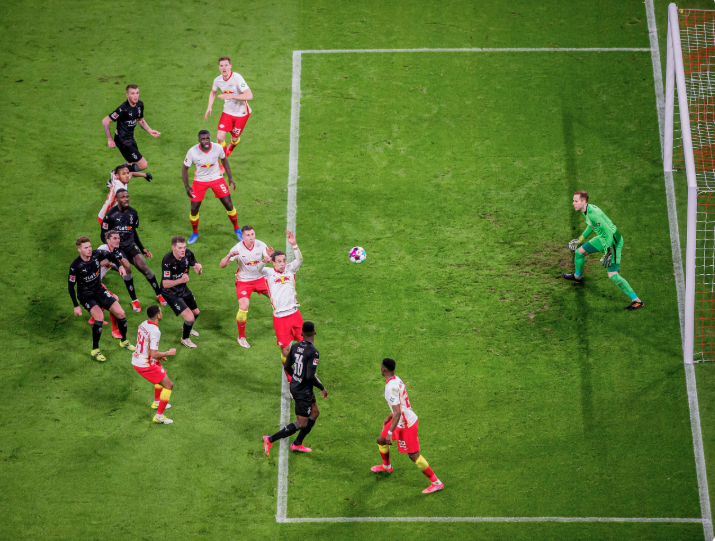
In the 2018/2019 Bundesliga season, corner kick data revealed distinctive tactical identities that shaped betting opportunities in over/under corner markets. Teams with attacking volume, high possession, and frequent wing play regularly posted corner-heavy matches, while defensive or low-block sides suppressed totals. Understanding these patterns allowed informed bettors to align their predictions with match flow rather than emotion.
Why Corner Kick Volume Reflects Team Identity
The number of corners a team creates or concedes usually traces back to its offensive intensity and spatial control. High-pressing teams that emphasize flank play naturally produce more corners through cutbacks and blocked crosses. Conversely, sides relying on counterattacks generate fewer corners but face a defensive barrage that raises against totals. Hence, corner statistics mirror the rhythm of possession and the tactical tempo adopted by both teams.
Data Patterns in the 2018/2019 Bundesliga
During the 2018/2019 campaign, attacking systems defined the league’s corner profile. Bayern Munich and Borussia Dortmund dominated possession, while clubs such as Leipzig and Hoffenheim maintained vertical patterns that also inflated corner counts. In contrast, teams such as Augsburg and Nürnberg demonstrated compact setups that limited both their own and opponents’ corner frequency.
| Team | Average Corners Won per Match | Average Corners Conceded | Typical Bet Outcome |
| Bayern Munich | 7.2 | 2.9 | Over corners favored |
| Borussia Dortmund | 6.4 | 3.5 | Slightly over trend |
| RB Leipzig | 6.1 | 4.1 | Over corners balanced by duel tempo |
| Hoffenheim | 5.9 | 5.0 | Consistent with open-play matches |
| Augsburg | 3.2 | 6.3 | Under favored; defensive setup |
| Nürnberg | 3.5 | 5.9 | Low offensive volume; under trend |
The pattern underlines how tactical differences—particularly pressing height and attacking channels—shaped overall corner probabilities, creating predictable betting profiles throughout the season.
Tactical Traits That Drive High Corner Totals
H3: Wing Play and Positional Width
Teams prioritizing wide formations constantly forced defenders into blocks at the byline, amplifying corner counts. Bayern, for instance, capitalized on overlapping full-backs such as Kimmich and Alaba, generating numerous cutback opportunities.
H3: Shooting Frequency and Rebounds
Frequent shooting increases corner probability by producing deflections and parries. Clubs that shoot from medium range or aim low-driven efforts force saves that naturally extend play into repeated set-piece chances.
Reading Match Context During Corner Betting
Match dynamics heavily alter corner expectations mid-game. When dominant teams lead comfortably, their corner frequency often drops as aggression declines. Conversely, when trailing, their corner efforts surge through late attacking waves. Live bettors monitoring real-time momentum can anticipate these shifts better than static pre-match models.
Interpreting Value Through UFABET Data Streams
In practical settingsSEO Title: Bundesliga 2018/2019 Corner Analysis – Best Teams for Over/Under Corner Betting
Meta Description: Analytical look at Bundesliga 2018/2019 corner data to identify teams suitable for over or under corner markets, emphasizing tactical patterns and match flow correlations.
Slug: bundesliga-2018-2019-corner-analysis-over-under
Bundesliga 2018/2019 Corner Analysis: Identifying Teams Suited for Over/Under Corner Betting
Corner statistics reveal much more than random match events—they represent tempo, pressing intensity, shooting discipline, and defensive shape. In the 2018/2019 Bundesliga season, understanding which sides repeatedly forced or conceded corners provided insight into match dynamics and helped refine over/under corner betting models. Teams that attacked aggressively but lacked finishing efficiency often produced high corner counts, while structured defensive units suppressed both shots and corners.
Why Corner Volume Reflects Playing Style
Corner totals reflect a team’s territorial control more accurately than possession percentages. A side continuously advancing into wide areas naturally registers more corners, signaling offensive volume and attacking persistence. Conversely, low corner frequency can stem from compact defending or heavy reliance on counterattacks. Recognizing these strategic traits supports bettors predicting match rhythm under varying tactical setups.
Teams Generating the Highest Average Corners
The 2018/2019 Bundesliga’s attacking momentum was driven by dynamic sides prioritizing wing play and quick transitions. Average corner data showed consistent leaders in offensive creation measured through set-piece frequency.
| Team | Average Corners Won | Average Corners Conceded | Match Tempo Classification |
| Bayern Munich | 7.1 | 3.8 | High-possession dominance |
| RB Leipzig | 6.5 | 4.2 | Fast, pressing-oriented |
| Borussia Dortmund | 6.0 | 4.0 | Balanced, attacking control |
| Hoffenheim | 5.8 | 5.5 | Open, transitional football |
| Hertha Berlin | 4.4 | 6.2 | Reactive, countering focus |
High-corner sides like Bayern and Dortmund catered to “Over Corner” markets, while lower-paced teams such as Hertha Berlin leaned toward “Under Corner” outcomes. Identifying this contrast proved valuable for both pre-match and in-play decision-making.
Mechanisms Driving High or Low Corner Outcomes
Tactical Pressure and Shot Conversion Rates
When offensive finishing lags but attacking pressure remains constant, corners rise due to blocked or deflected attempts. In contrast, teams finishing early chances often reduce corner totals because attacks culminate faster. Thus, understanding conversion patterns enhances prediction accuracy for corner volume rather than relying solely on tempo metrics.
Connecting Corner Behavior to Match Flow
Corner totals move with match state: trailing teams produce more corners due to urgency, while sides in comfortable leads restrict forward engagement. Evaluating how specific Bundesliga teams responded to scoreline context clarified their corner potential. For example, RB Leipzig’s late-match surges inflated Over Corner odds in tight games, whereas Bayern’s ball-control phases stabilized totals after scoring first.
Integrating UFABET for Corner Market Analysis
In situations where statistical context requires validation beyond surface numbers, referencing ufa ufabet เว็บตรง offers practical analytical depth. This betting platform provides interactive data previews, corner line fluctuations, and real-time market responses to tactical shifts. Observing how line adjustments react to in-game momentum assists bettors in correlating team style with evolving price dynamics. Through such statistical overlays, users can recognize whether shifts stem from random chance or pattern-based behavior, making strategy alignment more evidence-driven.
Identifying Under Corner Candidates
Teams prioritizing deep defensive lines naturally limit corners. Clubs like Augsburg, Freiburg, and Mainz managed matches through compact blocks and low-risk distribution, compressing play inside their defensive half. Their low corner averages were not accidental but structural, tied to risk aversion and emphasis on positional integrity. Recognizing this mechanic aided bettors seeking lower totals even in seemingly open fixtures.
Comparative Breakdown: Over vs. Under Profiles
Bundesliga teams could be segmented by their corner-producing tendencies, revealing consistent identity-based differences rather than isolated anomalies.
- Over Corner Profiles: Bayern Munich, Dortmund, RB Leipzig, Hoffenheim, Bayer Leverkusen.
(These teams maintained sustained attacking presence, high shot frequency, and wide setups.) - Under Corner Profiles: Augsburg, Freiburg, Mainz, Nürnberg, Hannover.
(Compact spacing, dependence on long passes, and slower buildup defined their games.)
Interpreting this structure underscored how tactical discipline overrode short-term randomness, proving that style often governs corner consistency.
Evaluating Market Behavior via casino online Data Systems
In another evaluative layer, bettors examining database-driven trends on a casino online platform could extract aggregated corner outcomes paired with live odds fluctuations across various Bundesliga matches. Such systems occasionally reveal when corner markets lag behind tactical evolutions—offering windows of discrepancy where betting efficiency peaks. By cross-referencing historical averages with live pricing, participants gain probabilistic footing instead of reacting intuitively, reinforcing disciplined bet selection rooted in consistent corner modeling.
Recognizing Statistical Limitations
Even the most data-rich corner analysis must account for event volatility—red cards, weather conditions, or early goals frequently disrupt expectations. Overreliance on historical averages can mislead when situational context changes abruptly. Balancing long-term data with in-play intuition avoids overfitting predictions to outdated or rigid assumptions.
Summary
Bundesliga 2018/2019 data confirmed that corner frequency stems primarily from tactical identity rather than random variance. Teams emphasizing high pressing and wing overloads consistently triggered Over Corner outcomes, while low-risk defensive systems favored Under patterns. For bettors adapting to match rhythm and market dynamics, combining statistical frameworks with live observation remains the most sustainable approach to corner-line betting efficiency.
